Can science make us immortal?
You may have heard about Chinese President Xi Jinping and Russian President Vladimir Putin discussing human longevity, organ transplants and radical life extension, unguarded, on a hot microphone. This is what the world’s most powerful people discuss. Interestingly, the science behind longevity is also catching up. Theoretically, if every year science can increase lifespan by 1 year, then the current stock of people (or at least those with access to this technology) could achieve immortality. This is called longevity escape velocity. That is quite a thing.
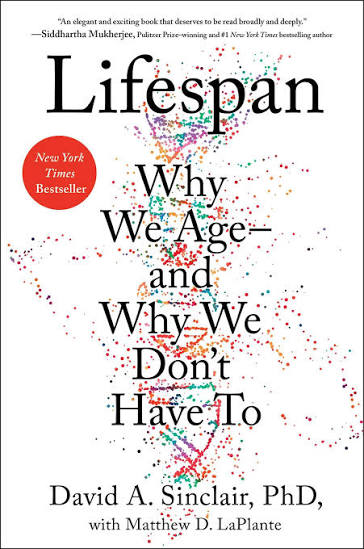
I have read two books on this subject, Lifespan and Why We Die, which have helped improve my own understanding. Both these books speak about the root causes of ageing. My basic understanding is that ageing is a process of information loss. As we grow older our cells divide, and each time they make copies they make small mistakes. Over time these errors lead to all sorts of problems which ultimately lead to death. Sinclair goes a step further and argues that it is mostly the cell losing its epigenetic instructions, i.e. which genes to read, rather than damage to the DNA itself. Now this may be oversimplifying stuff but you get the drift.
Bryan Johnson is also running his own immortality project on himself. As are various labs which have cropped up in Silicon Valley, each finding different routes to solve this problem. In the last 5 years though we have also had the advent of AI, which we have seen make advances in long standing research problems (at least in the field of mathematics).
Japan, as you know, has one of the highest shares of centenarians in the world. And this is without any special treatments or supplements. So we know that a mix of genes and a healthy lifestyle by itself can add about 25 years to a lifespan (assuming an average lifespan of 75 years). Therefore what science needs to solve for is how to make up for genetic differences (which lead to poorer mortality), and how to make longevity less dependent on people being motivated to lead a healthy lifestyle.
In the short run though, both these books suggest a couple of things which currently seem to slow the markers of ageing. These include fasting (either daily intermittent fasting, a once a week fast, or a month long fast as is practiced in some religions). Fasting is believed to activate a family of proteins called sirtuins, which in turn help repair cell damage. This was the original survival circuit in homo sapiens, when food was not as abundant as it is today. Similarly, there are other obvious things such as exercise, though people disagree on what form and how much works best. If you read these two books you can definitely incorporate some habits into your routine. Given it is an emerging science there is a lot of debate on the factors of longevity, and in fact these two books puncture each other’s arguments in places.
Leading researchers in this field are already talking about a lifespan of 150 years. Assuming we do not kill ourselves through a human level extinction event such as a nuclear war (it just takes 72 minutes, read my notes on that here), then we have some really tough questions to ask ourselves. What do we do when we become immortal? What will life look like? Does the planet have enough resources to support such lifespans? And will increased longevity come with a better quality of life? These are tough questions in themselves. I think Yuval Noah Harari has tried to answer some of these questions in his book Homo Deus. But you can imagine how this kind of progress can create new opportunities as well as problems.
Hope you enjoy reading these two books, and check if you are reaching the escape velocity to cross the line of mortality.