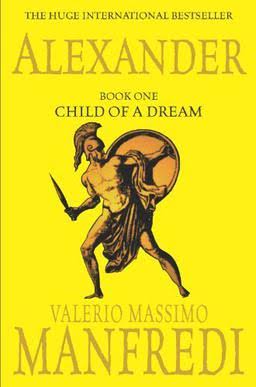
 Alexander (Book 1 - Child of a Dream)
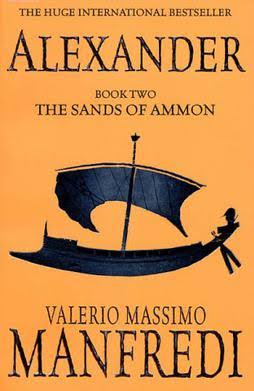 Alexander (Book 2 - The Sands of Ammon)
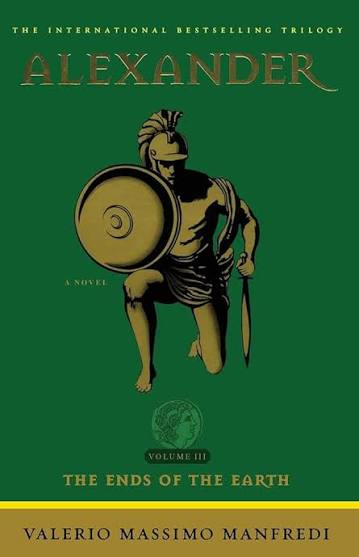 Alexander (Book 3 - Ends of Earth)
Reading list for being better company at a party (Part 2)
This trilogy about Alexander the Great was recommended to me by a colleague in private equity. Apparently, the founder of his firm was so inspired by Alexander’s adventures that he named the firm after him. You can try and guess the name.
Most of us studied Alexander in history class. But our history books, unfortunately, were never written to excite us about a boy who was born to conquer the world. This trilogy is written as a story and takes you back in time into his life. It is fiction, but Manfredi is a historian and archaeologist himself, and the story largely follows the known accounts.
Alexander (Child of a Dream) [Book 1]
The first part covers Alexander’s early life in Macedonia. It explores the dynamics between him and his parents, and introduces the key people in his life: his mother Olympias, his tutor Aristotle, and his friends Ptolemy and Hephaestion. As the story builds, his ambition and courage clearly start to emerge. It ends with his father Philip’s murder and a 20-year-old Alexander becoming king.
Soon after becoming king, Alexander goes to meet Diogenes, the philosopher who owned nothing. Alexander, already the most powerful man in Greece, asks if there is anything he can do for him. Diogenes says, “Yes. Move a little, you are blocking my sun.” Alexander’s men laugh, but he walks away saying that if he were not Alexander, he would want to be Diogenes. A man who wanted everything, admiring a man who wanted nothing.
Alexander: The Sands of Ammon (Book 2)
This is where the adventure really begins. Alexander crosses into Asia with an army much smaller than the Persian empire he wants to take on, and keeps winning anyway. You get the famous battles against Darius, the long siege of Tyre, and his trip across the desert to the oracle of Ammon in Egypt. By the end, he believes he is the son of a god, and the people around him start to wonder about it too.
At Gordium there is a cart tied with a knot so complicated that nobody has been able to undo it. The legend says whoever unties it will rule Asia. Alexander looks at it for a while, then takes out his sword and cuts it in one stroke.
Alexander: The Ends of the Earth (Book 3)
The final book asks a question I kept thinking about after I finished it: is there a limit to ambition? Alexander defeats Persia, burns Persepolis, and keeps going east until he reaches India. He fights King Porus on the Jhelum, and his favourite horse Bucephalus dies there (he names a city after it). Then, on the banks of the Beas, his army refuses to go any further. They had followed him for eight years and thousands of kilometres, and wanted to go home. On the way back, the army marches through a desert with almost no water. A few soldiers find a little and bring it to Alexander in a helmet. He thanks them, and then pours it on the sand in front of everyone, because his men had none and he would not drink while they went thirsty. Whatever you think of his ambition, it is easy to see why they followed him that far.
All in all this a thoroughly enjoyable series.
P.S - The name of the Private Equity firm is Xander Capital.